Finding an English or Spanish-speaking therapist in the Yvelines: why language is not a small detail
A clinical look at multilingual therapy, code-switching, emotional expression and choosing an English or Spanish-speaking therapist near Saint-Germain-en-Laye.

People sometimes ask for therapy in English or Spanish as if it were a practical preference. Like choosing an appointment time. "It would be easier if the therapist spoke English." "My French is fine, but not for this." "My partner needs Spanish, otherwise they will stay quiet."
I don't think language in therapy is a small detail. It can change what becomes speakable.
A person may be fluent in French at work and still lose all nuance when talking about shame, grief or family history. Someone else may prefer English because it creates a little distance from painful memories. A parent may use Spanish for tenderness and English or French for rules. A couple may switch languages when one person wants closeness and the other wants control of the conversation.
That matters clinically.
Different languages can hold different emotional worlds
Research on multilingual psychotherapy has grown in recent years. Reviews describe code-switching as one of the central phenomena in multilingual therapy. People may switch languages to find a more precise word, access a memory, soften the emotional charge, increase it, or express something that feels culturally unavailable in the other language.
One finding that makes sense to me clinically is that the first language is often experienced as more emotionally charged, but not always. For some people, a later-learned language can feel safer. It can create just enough distance to say something that would feel too raw in the language of childhood.
So the question is not simply, "Which language do you speak best?" It may be, "Which language lets you say this part of the truth?"
In family therapy, language can include or exclude
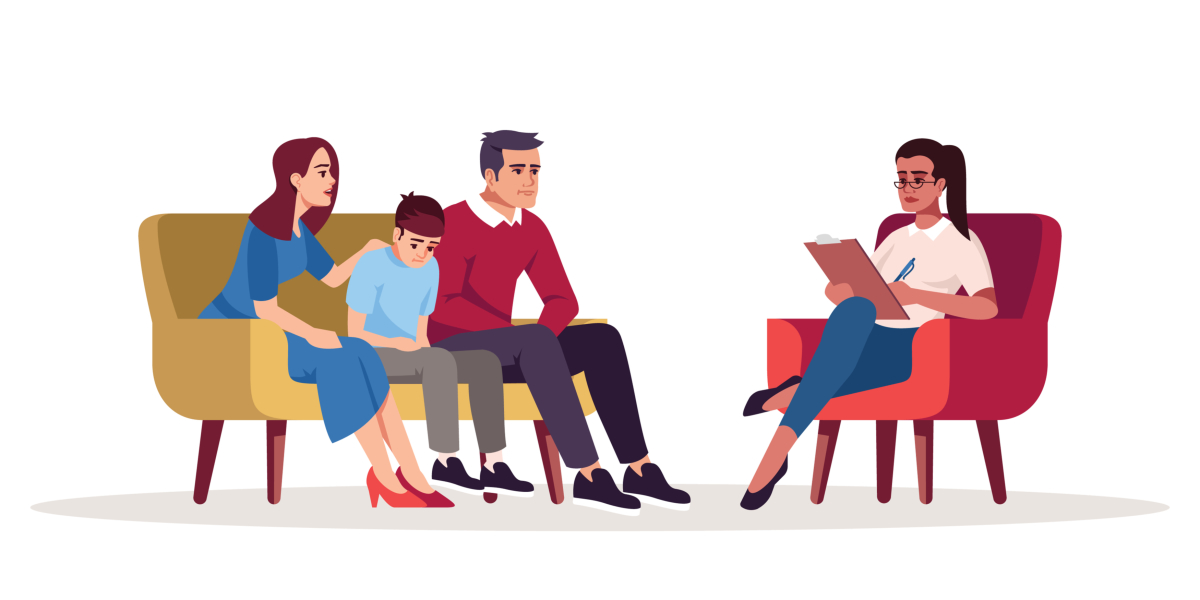
In individual therapy, language shapes emotional expression. In family therapy, it also shapes power. Who understands? Who translates? Who gets corrected? Who becomes quiet? Who can speak directly to the therapist, and who needs another family member to carry their words?
In bilingual and trilingual families, language switching can be warm, playful and practical. It can also become a way to protect someone, hide something, or align with one family member against another. I do not assume I know what a language switch means. I get curious about it.
For example: when a parent moves from English to Spanish while talking to a child, is it because the subject is more intimate? Because the parent is angry? Because rules live in one language and comfort in another? Because the child only half-understands and the parent needs to be sure? The same behavior can have very different meanings.
Choosing a therapist in France when titles are confusing
In France, this can become even more confusing because the professional titles do not translate perfectly. The title psychologue is regulated. Psychopraticienne is not the same title, and it should not be used as if it were. What matters is being clear about training, scope of practice, approach, and fit.
For international clients, I would look for clarity on a few things: what languages are actually used in session, whether the therapist is comfortable with code-switching, whether they have experience with couples and family systems, and whether they can talk about culture without reducing everything to culture.
Because not every problem in an international family is cultural. And not every cultural difference is a problem.
What I would listen for
If you are looking for an English-speaking therapist, Spanish-speaking therapist, or trilingual therapist near Saint-Germain-en-Laye, Chatou or the Yvelines, I would pay attention to how you feel in the first conversation.
Can you speak without performing? Can your partner use their own words? Can your teenager switch languages without being made to feel difficult? Does the therapist stay curious about what language is doing in the room?
Those questions matter as much as the keyword you typed into Google.
Some of the articles and resources I used for this piece
- Verkerk, L., Fuller, J. M., Huiskes, M., & Schuppert, A. (2023). Expression and interpretation of emotions in multilingual psychotherapy: A literature review. Counselling and Psychotherapy Research.
- Verkerk, L., Backus, A., Faro, L., Dewaele, J.-M., & Das, E. (2021). Language choice in psychotherapy of multilingual clients: Perspectives from multilingual therapists. Language and Psychoanalysis.
- Pérez Rojas, A. E., Gelso, C. J., & Bhatia, A. (2014). To switch or not to switch: Inviting bilingual clients to switch languages in psychotherapy. Counselling Psychology Quarterly.
- Fan, F., & Prosek, E. (2025). Bridges or barriers? A systematic literature review of multilingualism in counseling. International Journal for the Advancement of Counselling.